

Defining Universal Human Rights
Duration
One 50-min class periodSubject
- History
Grade
11–12Language
English — USPublished
Updated
Overview
About This Lesson
In this lesson, students will consider what rights should belong to every human being on earth, as well as the challenges of trying to create an international framework of rights for all. Students will first define a right and then reflect in their journals about the rights that they have, as well as rights that they don’t have but should, at home, at school, and in their communities. Then students will compare their definitions with UNESCO’s definition of a right and work with a group to reach a consensus about three human rights that they believe every person is entitled to enjoy.
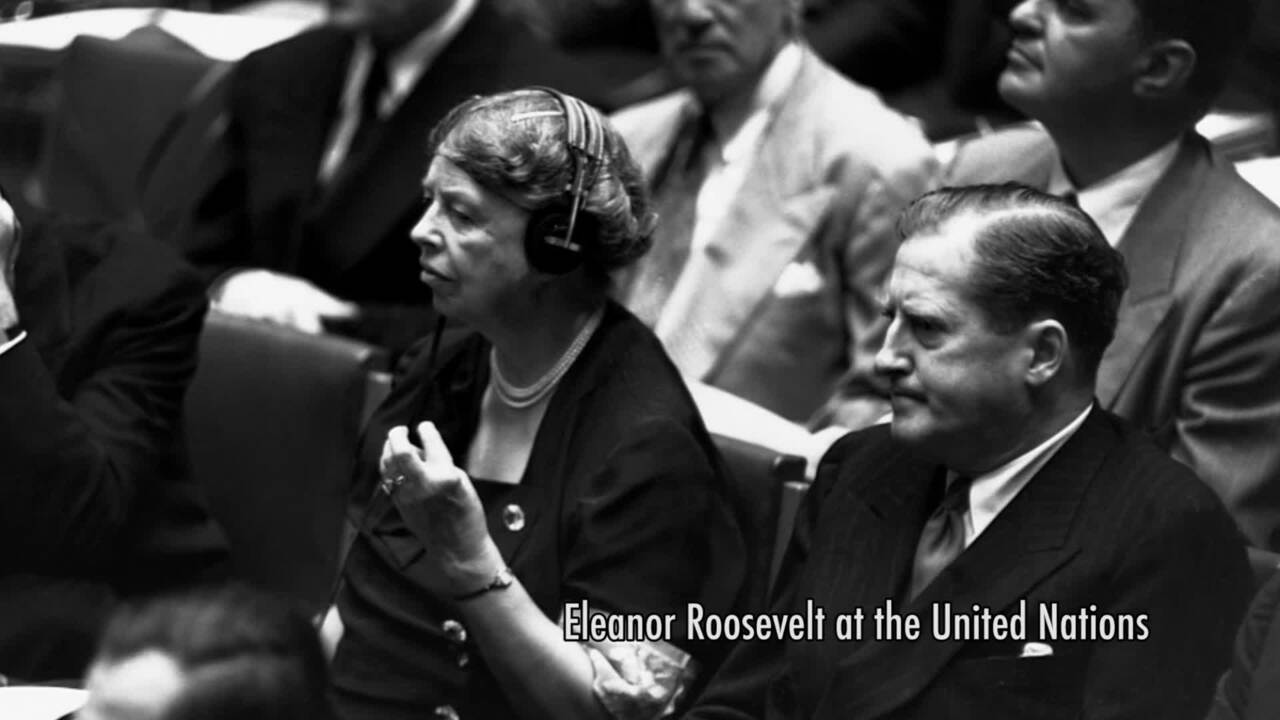
Finally, students will learn how the United Nations Commission on Human Rights, led by Eleanor Roosevelt, grappled with these same questions as UN representatives worked together to draft a Universal Declaration of Human Rights in the aftermath of the Great Depression, World War II, and the Holocaust.
Preparing to Teach
A Note to Teachers
Before teaching this lesson, please review the following information to help guide your preparation process.
Lesson Plans
Activities
Extension Activity
Materials and Downloads
You might also be interested in…
10 Questions for the Past: The 1963 Chicago Public Schools Boycott

The Union As It Was

Radical Reconstruction and the Birth of Civil Rights

Expanding Democracy

The Targeting of Uighur Muslims in China

Dismantling Democracy (UK)

The Holocaust - Bearing Witness (UK)

The Holocaust - The Range of Responses (UK)

How Should We Remember? (UK)

Justice and Judgement after the Holocaust (UK)

Kristallnacht (UK)


Unlimited Access to Learning. More Added Every Month.
Facing History & Ourselves is designed for educators who want to help students explore identity, think critically, grow emotionally, act ethically, and participate in civic life. It’s hard work, so we’ve developed some go-to professional learning opportunities to help you along the way.
Exploring ELA Text Selection with Julia Torres
On-Demand

Working for Justice, Equity and Civic Agency in Our Schools: A Conversation with Clint Smith
On-Demand

Centering Student Voices to Build Community and Agency
On-Demand

